Bent Flyvbjerg spent decades studying why megaprojects go wrong.
His conclusion became known as the Iron Law:
Over budget. Over time. Over and over again.
His research found that roughly 9 in 10 megaprojects run over budget.
And the pattern is still visible today.
A June 2026 analysis of more than 20 North American LNG export terminals found that completed projects had averaged 59.7% above their original cost estimates. Projects still under construction were already averaging 38% over.
One compounding factor is the increasing pressure to compress schedules by overlapping phases that were once allowed more separation. Engineering, procurement and construction now have to move in parallel, with more interfaces that must remain synchronised in the field.
After 40+ years on major EPC projects, I've watched the same thing happen from a different angle.
The engineering isn't necessarily what fails.
The problem is often the gap between what the schedule says should happen and what the site can actually execute.
The drawing isn't issued.
The material isn't at the work face.
The predecessor isn't complete.
The crane isn't available.
The work pack gets released anyway.
And nothing necessarily looks wrong in the schedule — until the crew stands there with nothing productive to do.
By the time that lost productivity appears in the monthly report, the money is already spent.
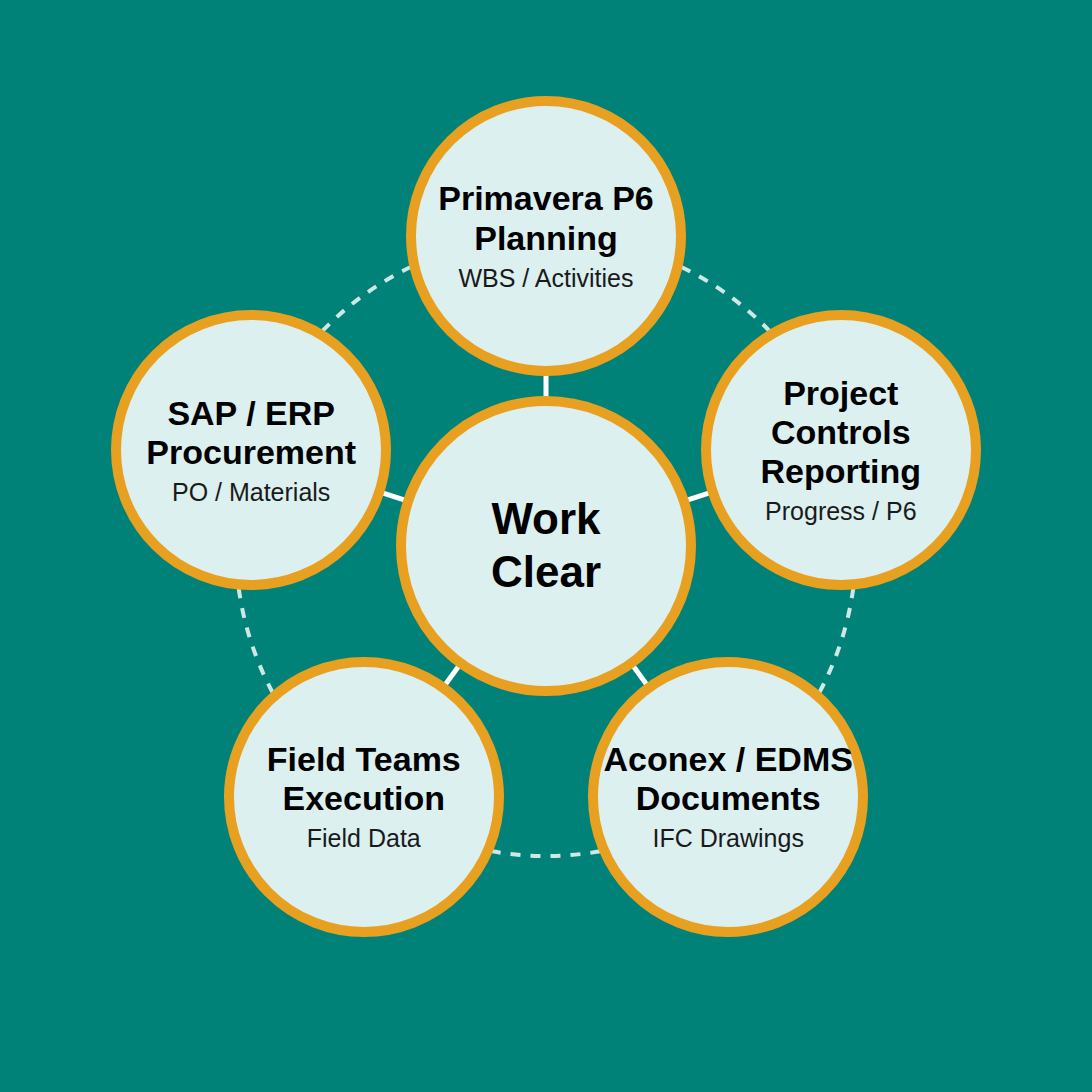
That gap is one of the reasons I built WorkClear.
Not another dashboard.
A control layer between the plan and the physical work face — checking whether work is actually ready to execute before release, then feeding verified field progress back into the schedule.
Because perhaps one of the most expensive questions on a major project is also one of the simplest:
Can this work actually be done today?
How are you controlling it on your projects?