18 months. 16 reactors replaced. 2 live fuel refineries. No significant delays.
I've worked on harder projects.
I've never worked on a better-prepared one.
I came in as the erection contractor's execution planner, after engineering and procurement were already complete. The designers had the original blueprints and specifications from when the refineries were built, two decades earlier.
The work itself was anything but simple.
Each reactor arrived as four 40-tonne ring sections with 110mm walls, plus top and bottom dished ends.
Rings welded in pairs.
A dished end fitted to each half.
The centre weld completed on site by robot in continuous passes, then heat-treated.
There was one heavy-lift crane capable of handling the work, brought in from overseas for the duration. It had to be partly dismantled, moved and reconfigured between every lift — in the yard and on site.
Special bogies and cradles.
Traffic management.
Hot-work permits.
And all of it with the seven neighbouring reactors still online.
It ran almost to the letter.
Not because the work was easy.
Because of what was in place before we mobilised:
Engineering complete.
Procurement complete.
A dedicated Model Engineer manning the model at the Project Office from kick-off.
All materials free-issued from the refinery's central stores, bagged and tagged by work pack.
So when a crew arrived at a work front:
The drawing was current.
The material was already bagged for that pack.
And the work before it was finished.
That's what readiness looks like when it's real.
Not a percentage.
Not a green status.
Work that can actually start.
Very few projects get that luxury now. Design, procurement and construction overlap, and construction starts before the other two are ready.
You can't always buy that much preparation. But you can apply the same test, pack by pack, before each one is released:
Is everything this work needs actually here?
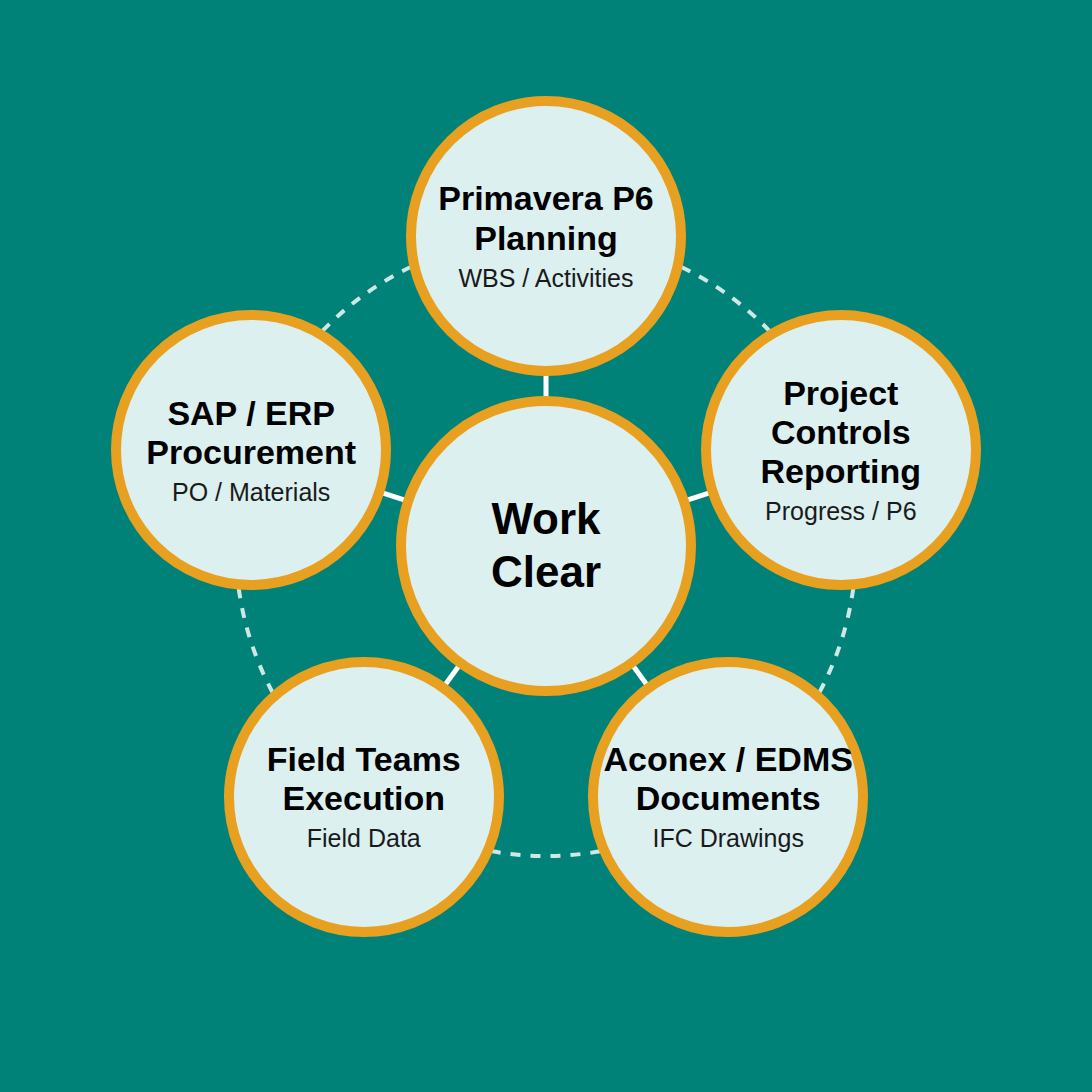
That's what I built WorkClear to do — for the projects that don't get that head start.
READINESS BEFORE RELEASE.
What's the best-prepared project you ever worked on, and what did they get right before the first crew mobilised?